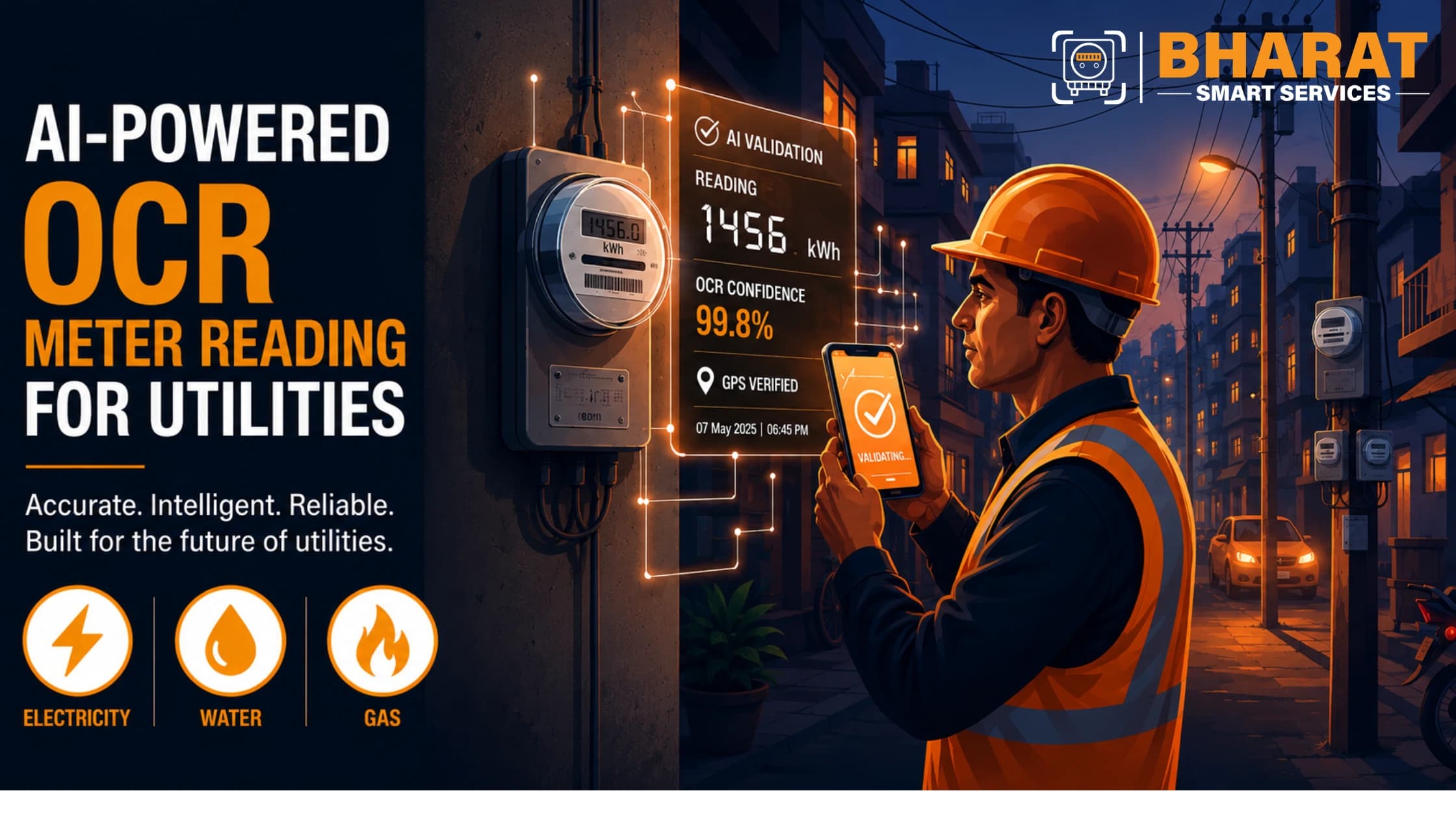
4.5 crore-plus meters get read on this platform every month. None of them were replaced to make that possible. Some are digital displays with a cracked cover or a dead pixel. The camera doesn't care.
That surprises people. When utility teams hear "AI-powered meter reading," most assume it means new meters, a communication module, a rollout plan, a procurement cycle. It doesn't, not here. The meter stays exactly as it is. What changes is who - or what - reads it, and how that reading gets checked before it hits your billing system.
|
Key takeaways ✦ AI-OCR reads the meter that's already installed - no swap required. ✦ Every photo is checked on the spot for blur, glare, and tampering, then cross-checked against reading history. ✦ It's a field-visit tool, not a substitute for AMI - there's no continuous or remote data stream. ✦ Runs today across 21+ utilities, 4.5 crore+ reads a month, 99.9% accuracy. |
The Meter Base Most Utilities Are Actually Working With
Smart meter and AMI programmes are worth doing. They're also, by nature, slow to reach every consumer - new meters get procured, communication infrastructure gets installed, and it happens in phases, usually starting with the highest-value connections. That's not a criticism. It's just what a hardware rollout looks like.
While that phasing plays out, most utilities still have a large share of consumers on meters that work fine but get read by hand. AI-OCR is built for that portion of the base. It digitizes the reading process on the meter that's already installed - not a new one.
|
The distinction: AMI changes what the meter is. AI-OCR changes how the existing meter gets read. They're not competing for the same job. |
What Actually Happens When a Meter Gets Scanned
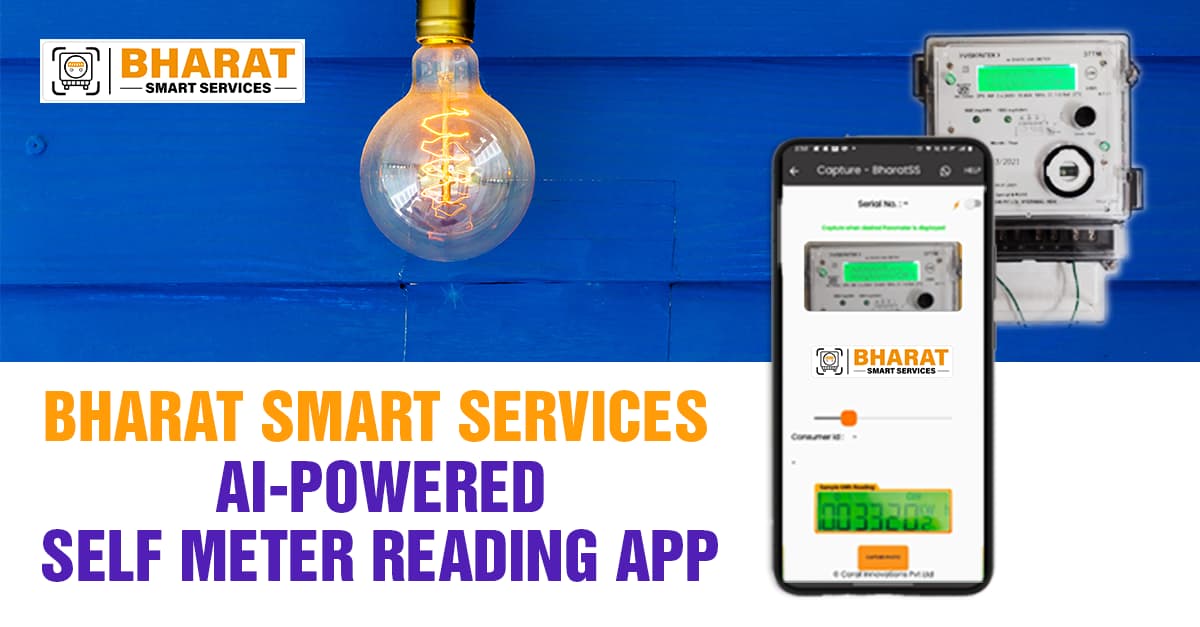
A field agent still visits the premises. That part hasn't changed, and it isn't going to. What's different is what they do once they're standing in front of the meter. Instead of writing a number on a paper register, they open the app on their phone and take a photo. From that one photo, a few things happen automatically:
| What happens | |
| 1 | The mobile camera is placed facing the meter display - no manual writing down of meter readings required |
| 2 | The reading gets extracted - from the digital display |
| 3 | The photo gets checked on the spot. Blurry, glared, or a photo of an old photo — a known way readings get faked - gets flagged right there, while the agent is still standing at the meter. |
| 4 | The reading is compared against that connection's history. If it's way out of range, it gets held for a re-check instead of going straight into billing. |
| 5 | A geotagged, timestamped copy is stored, and the checked reading syncs to the billing or MDMS system - no register, no re-keying. |
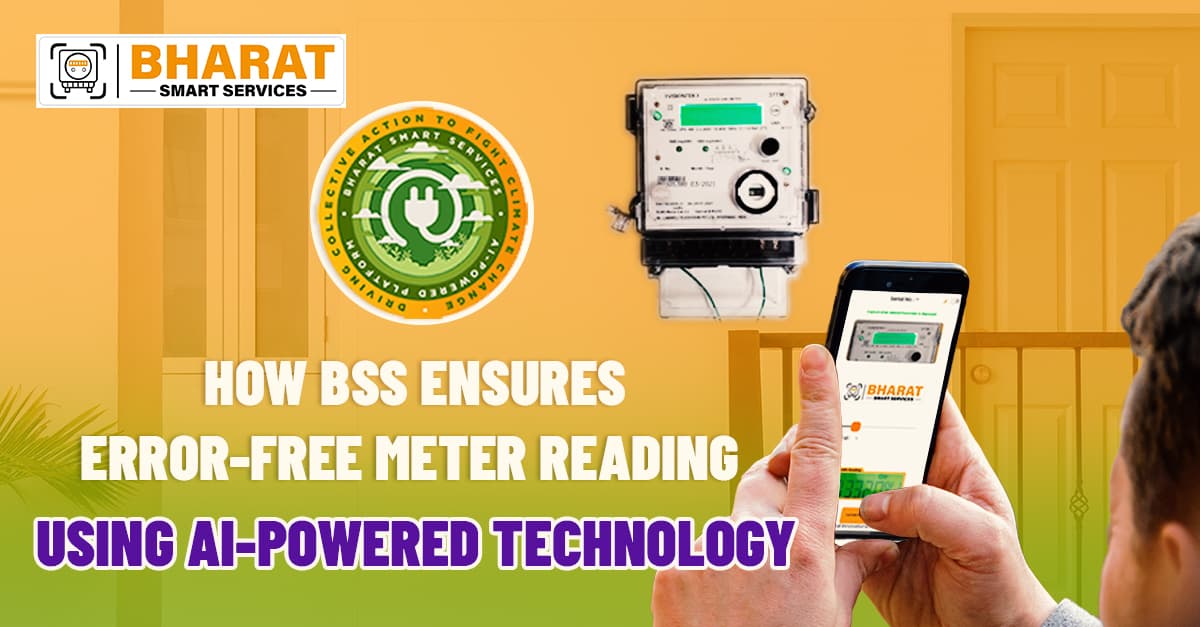
Most billing disputes trace back to one of two things: a wrong number written down, or a reading nobody can verify after the fact. This process is built around removing both.
Why Old Meters Aren't a Problem
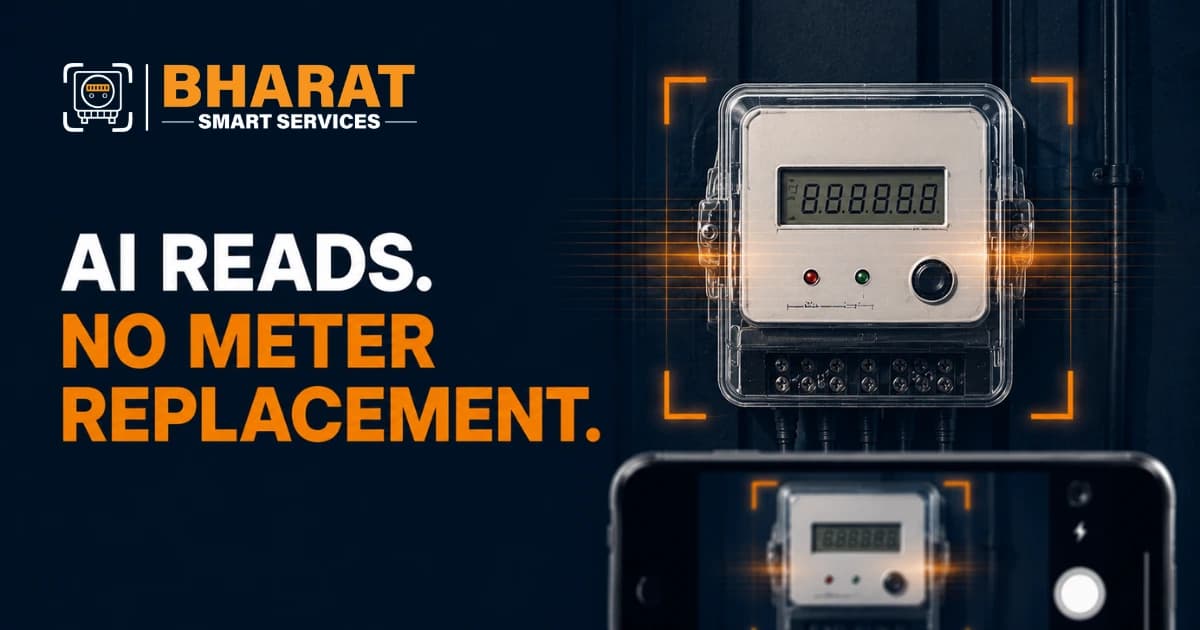
The AI doesn't need the meter to communicate with it. No chip, no SIM, no power draw beyond what the meter already has. It needs the display to be visible to a camera - which covers nearly every digital meter already in the ground, including the ones installed years before anyone was thinking about "smart" anything.
That's what makes it usable on day one across a mixed meter base - faded dials, dusty covers, glare, non-standard fonts on older digital displays. None of it requires touching the meter. Just reading it properly.
Where It Fits Alongside a Smart Metering Plan
Most utilities run a mixed base - some consumers on newer meters, a larger share still on the ones installed years ago. AI-OCR covers that larger, still-manual share without waiting for every connection to be upgraded. It also extends to meter types where remote communication infrastructure is rarer to begin with, like water and gas.
And it doesn't stop mattering once a meter is upgraded - the same photo-verification and audit trail apply to self-meter reading and spot inspections long after any single hardware programme wraps up.
What It Takes to Actually Run This
Field agents use the app on whatever smartphone they're already carrying. Verified readings sync directly into the utility's existing billing or MDMS system - the operations team keeps working from the same platform, just with cleaner data coming in instead of paper that needs re-typing. Supervisors get a dashboard showing coverage and flagged readings. No new hardware layer gets added anywhere in that chain.
|
Bharat Smart Services Ai-Powered OCR Meter Reading platform currently runs across 21+ utility clients, reads 4.5 crore-plus meters a month, and holds 99.9% reading accuracy — none of it dependent on a single meter being swapped out. It works across electricity, water, and gas connections, on whatever digital meter is already mounted on the wall. |
|
See How This Would Run on Your Existing Meter Base Request a Demo → |
Bharat Smart Services is an AI-powered utility metering platform, working with 21+ utilities across India on accurate, hardware-free field meter reading.