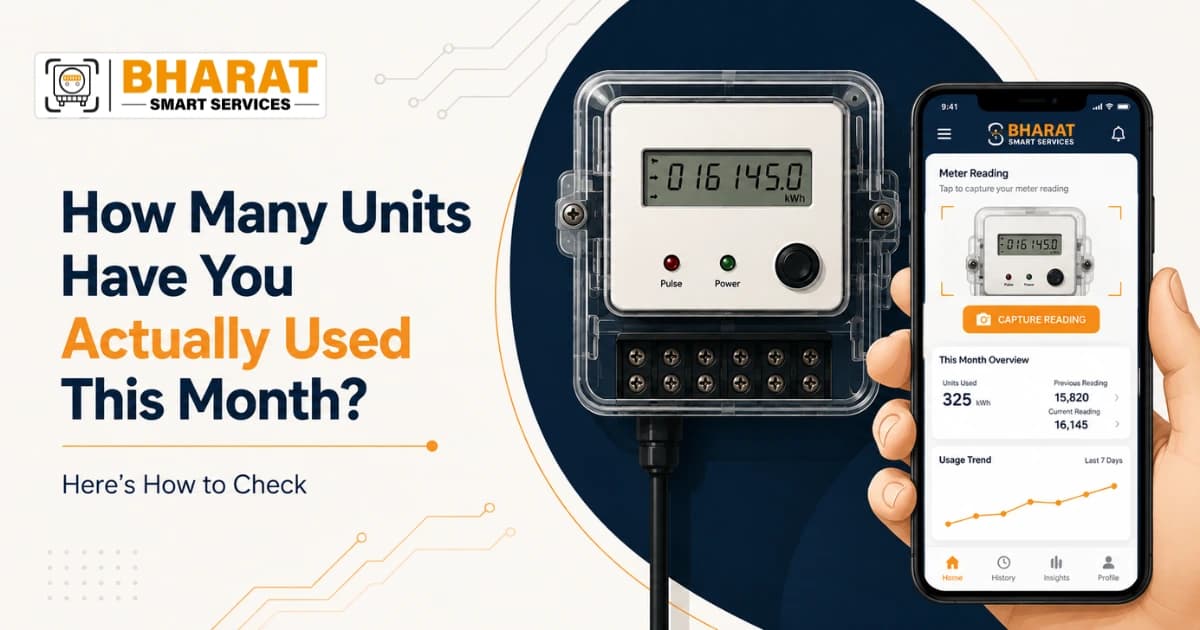
Previous reading: 15,820. Current reading: 16,145. That gap - 325 units - is the only feedback most households get on their own electricity use, and they get it once a month, after the fact. By the time the bill lands, whatever caused the spike (a geyser left on, a motor running rough, a new AC) has already happened. There's nothing left to do but pay for it.
You don't have to wait for that bill anymore. This is a quick rundown of how electricity units actually work, and the different ways - old and new - to keep track of them.
What's an Electricity Unit, Really?
One unit is one kilowatt-hour (kWh). A 1000W appliance running for an hour uses one unit. So does a 500W appliance running for two hours. Every device pulling current in your home adds to this total, and your bill is just that total multiplied by a rate. More units, higher bill - that part isn't complicated. Knowing which units came from where, and when, is the part most people never get to see.
Checking Your Meter With a Photo
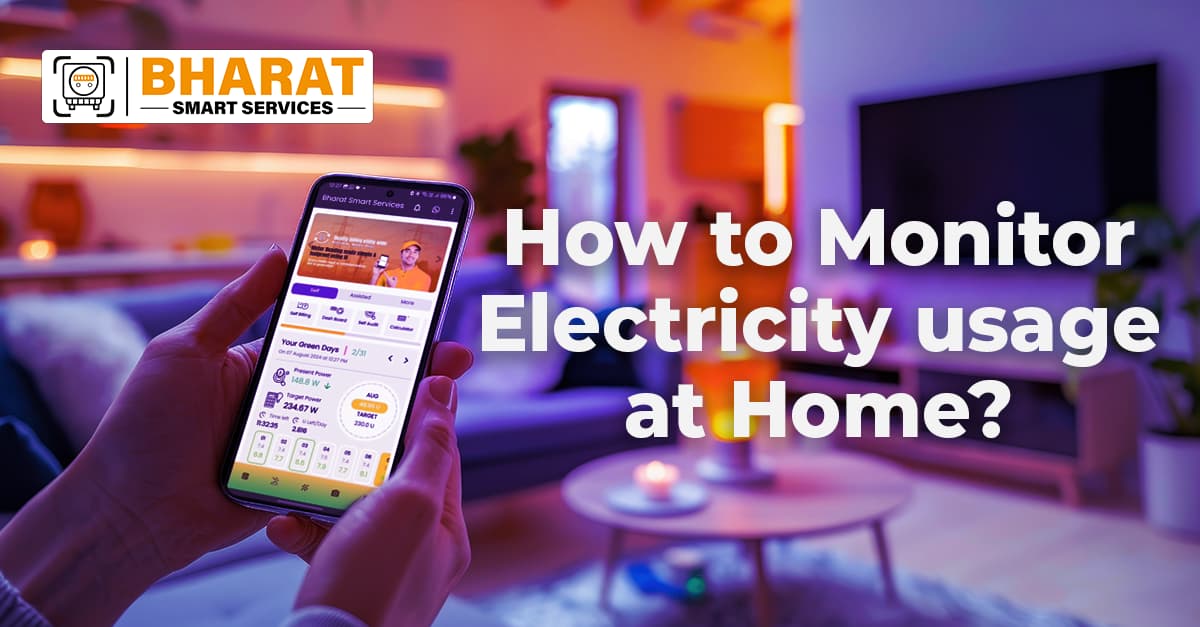
The Bharat Smart Services app does one specific job: you photograph your meter, and the app reads the display and logs it. No writing it down, no doing subtraction in your head, no losing the little notebook you were keeping readings in.
Over time, that builds a running record of your own consumption - day to day, not just month to month. You can see whether last week ran higher than the week before, and start to connect that to what changed at home. It won't tell you why on its own - you still have to notice "oh, that's the week the AC ran all night" - but it gives you the data to make that connection instead of guessing after the bill arrives.
What Your Bill Already Tells You
If all you want is last month's total, it's already on the bill - previous reading, current reading, units consumed, billing period. Most discoms print this clearly. It's reliable, and it costs you nothing extra to read. The catch is timing: it tells you what happened, not when. If your usage crept up mid-cycle because of a new appliance, the bill won't isolate that for you. You just get the final number.
Reading the Meter Yourself, the Old Way
You can still do this manually - walk out to the meter, note the reading, subtract yesterday's number from today's. It works. It's also easy to forget on a busy week, easy to mis-copy a digit, and there's no graph at the end of it, just a column of numbers in a notebook that's hard to make sense of six months later.
When You Need More Than a Reading: Bijli Auditor
Tracking units is step one. Understanding why they moved is a different problem, and that's what Bijli Auditor is built for - continuous visibility into consumption for homes, commercial spaces, and industrial setups, rather than a single number once a month.
With Bijli Auditor you can set a monthly consumption target, track progress against it through the month, and get flagged when usage runs ahead of where it should be - so a spike gets caught while it's still happening, not after it shows up on the bill.
|
Put simply: the app tells you how many units you're using. Bijli Auditor helps you work out what to do about it. |
A Few Habits That Actually Move the Needle
- Check usage through the month, not just when the bill shows up.
- Pay attention to the big draws - ACs, geysers, pumps, motors. These move the number more than anything else in the house.
- Switch things off when they're not being used. Obvious, and still the most skipped step.
- Compare week to week, not just month to month - that's where you catch a spike early.
- Set a rough monthly target for yourself, even an informal one, and check against it.
None of this requires new hardware or a big change in behaviour. It requires looking at the number more than once a month - that's really the whole shift.
|
Start Tracking Your Electricity Units Today No notebook, no guesswork. Download the Bharat Smart Services App |