Let's be honest, nobody checks their geyser's power usage until the electricity bill arrives and something feels off. That "something" is usually the geyser. It's not glamorous, nobody talks about it at dinner, but ask any electrician in Hyderabad which single appliance quietly builds a household's monthly bill, and geyser electricity usage comes up almost every time.
Here's the thing though - you don't need to switch to cold showers to fix this. You just need to understand where the waste is actually happening. So let's get into it.
Why Your Geyser Eats So Much Power
A geyser doesn't use a little power - it uses a lot. Most homes have a 1500W to 2000W geyser, and heating water takes a lot of energy, more than most other things in the house. Everyone already knows this.
What is surprising is this: your bill isn't mostly about how long you shower. It's about standby heating. Your geyser doesn't just heat water once and stop - it keeps reheating to hold that temperature, hour after hour, whether or not anyone's actually using hot water. Leave it on all day and it'll cycle on and off dozens of times, each cycle adding a little more to the bill, completely invisibly.
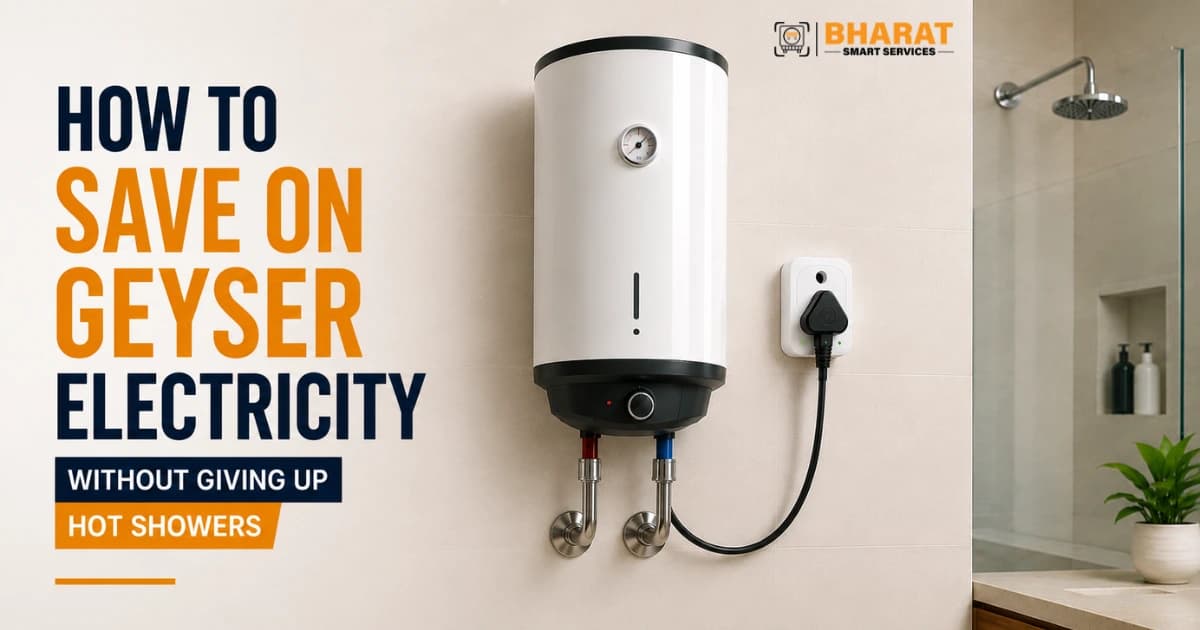
Once you actually get this, that it's the idle reheating, not the showering, that's costing you - the whole "how to save on geyser electricity" question gets a lot less mysterious.
The Habits That Are Quietly Costing You
A few patterns show up again and again in households with high bills:
Leaving the geyser on "just in case." This is probably the biggest one. People switch it on in the morning and it just... stays on. All day. For water nobody's using between 10am and 6pm.
The thermostat was set too high. Most geysers come with the dial set close to max, and most people never touch it. 55-60°C is more than enough for daily needs, you don't need very hot water just to bath.
No real schedule. Without a fixed routine, the geyser ends up running through hours when the house is empty.
Skipped maintenance. Hard water areas (and a lot of Hyderabad falls into this category) build up scale inside the tank over time. A scaled-up geyser has to work harder to heat the same litre of water, which means longer run times for the same result.
Forgetting to switch it off. This one's less about carelessness and more about how life actually works - you get busy, you leave for the office, and the geyser's been running the whole time.
If a couple of these sound familiar, don't worry - this is basically every Indian household, not just yours.
What Actually Helps
Some of this is just habit change, and it works better than people expect:
- Turn it on 10-15 minutes before you actually need hot water, not hours ahead. Geysers heat fast - there's rarely a reason to run one for half a day.
- Bring the thermostat down a notch. You'll barely notice the temperature difference, but your bill will.
- If your geyser's far from the bathroom, insulate the pipe in between. Heat loss over that stretch adds up more than people think.
- Get it descaled every so often, especially with Hyderabad's water. It's a small maintenance step that keeps the unit efficient.
- For quick jobs - washing hands, rinsing something - skip the geyser and use a mug of water instead. You don't need a full heating cycle for that.
- Try to bunch up hot water needs across the household instead of running the geyser on and off through the day.
Where a Smart Plug Actually Changes Things
Here's the honest part: most people already know these tips. That's not really the gap. The gap is remembering to act on them every single day and life doesn't really allow for that kind of consistency.
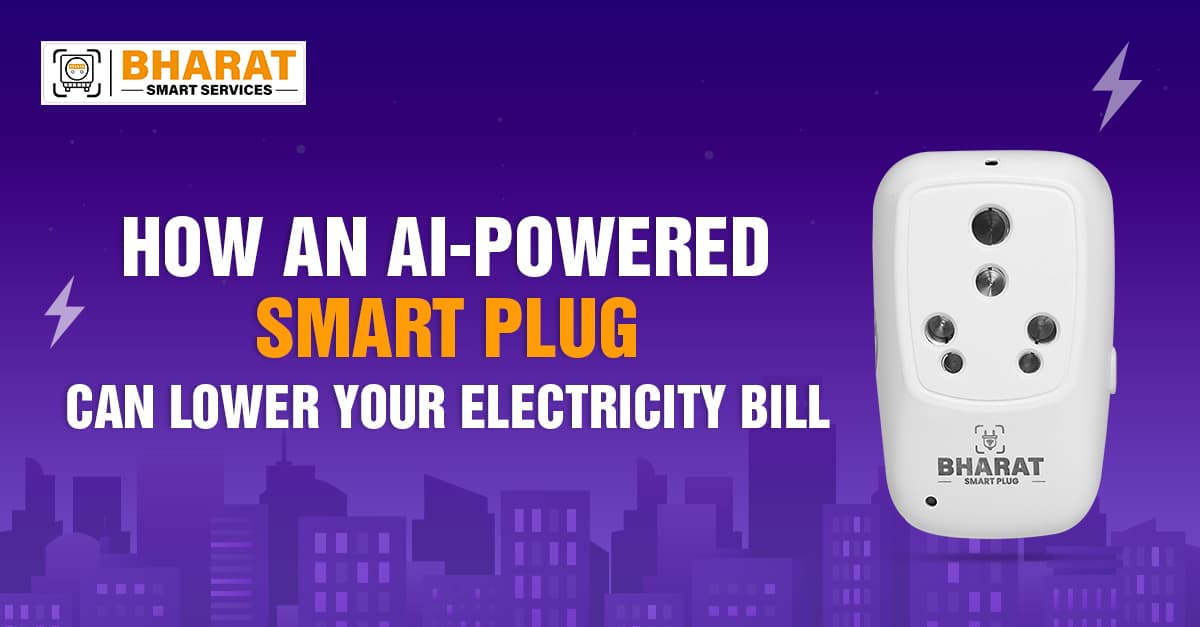
That's the actual problem the Bharat Smart Plug from Bharat Smart Services solves. Instead of relying on you to remember, it automates the whole thing.
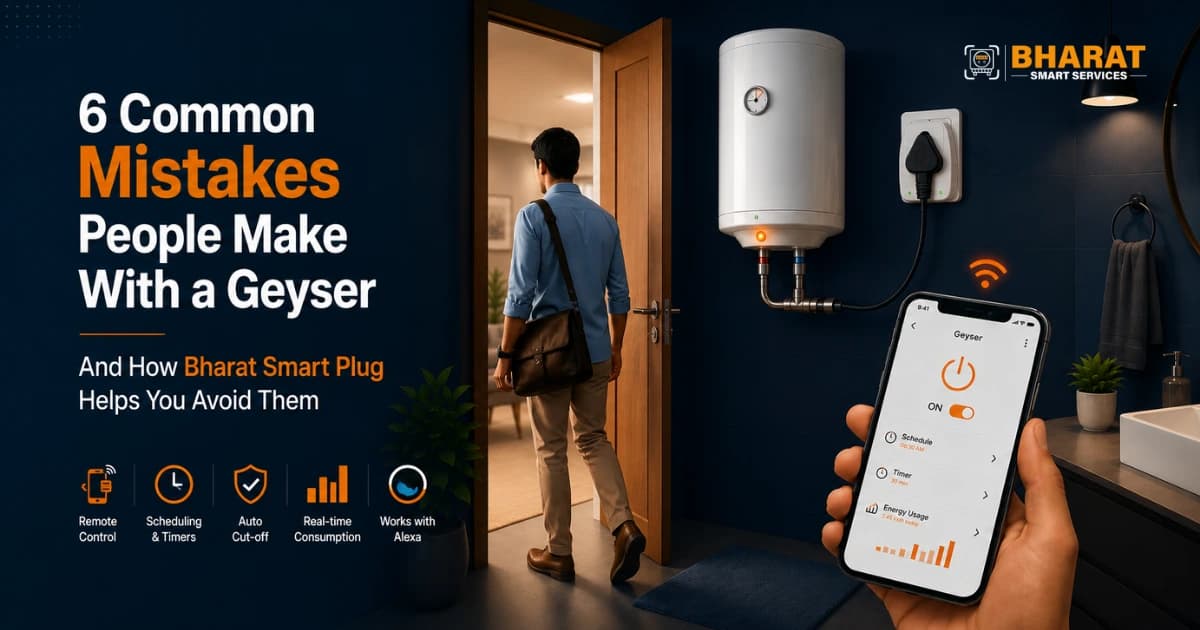
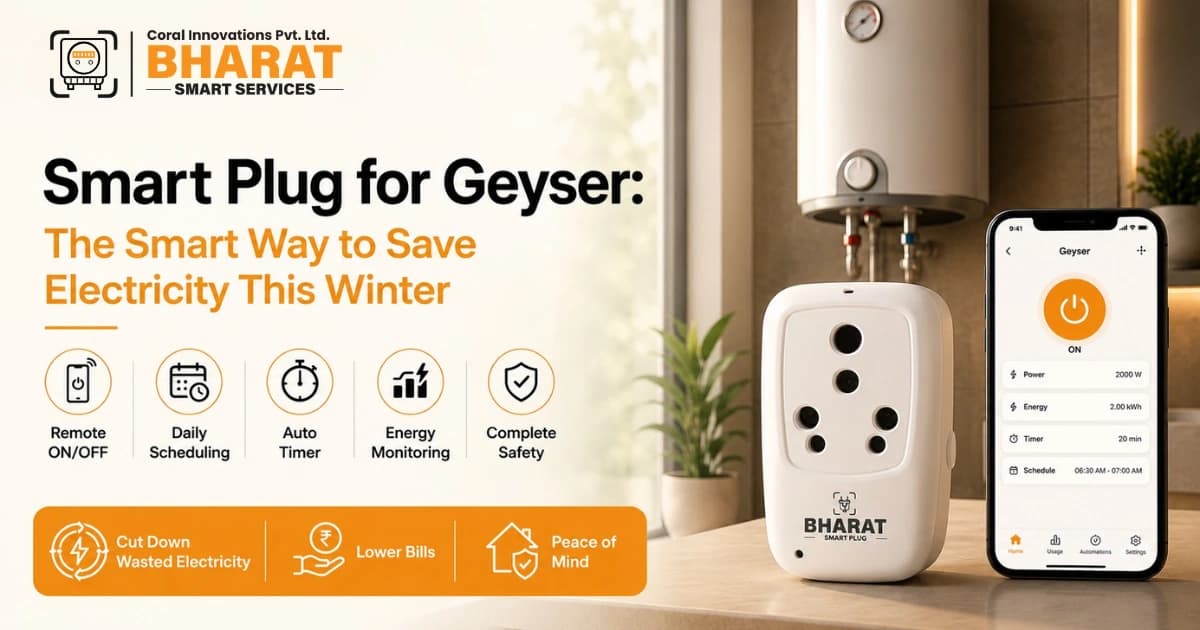
You can switch the geyser on from your phone 15 minutes before you're home, and off the second you're done, no more "I'll turn it off later" that turns into three extra hours of standby heating. It shows real-time consumption too, so instead of guessing where your electricity is going, you can actually see it. Set a daily schedule once and forget about it. There's an auto cut-off if you genuinely forget. And if you'd rather not even touch your phone, Alexa control and the Bharat Smart Home App handle it too.
It's less a gadget and more a way of making sure the good habits actually stick, instead of falling apart after week one.
The Bottom Line
Cutting down on geyser electricity usage isn't really about sacrifice. It's about closing the small gaps — the extra hour it stays on, the thermostat nobody adjusted, the day you forgot to switch it off. Fix those, and the difference shows up on your very next bill, no cold showers required.
If you're tired of guessing what your geyser's actually costing you, the Bharat Smart Plug is worth a look - it turns a mystery bill into something you can actually see and control.