Electricity is probably the most unnoticed part of our daily lives.
We switch on a light without thinking about it. We run the washing machine, charge our phones, use the air conditioner, cook with electrical appliances and pay the electricity bill every month.
But very few of us think about everything that happens before electricity reaches that switch.
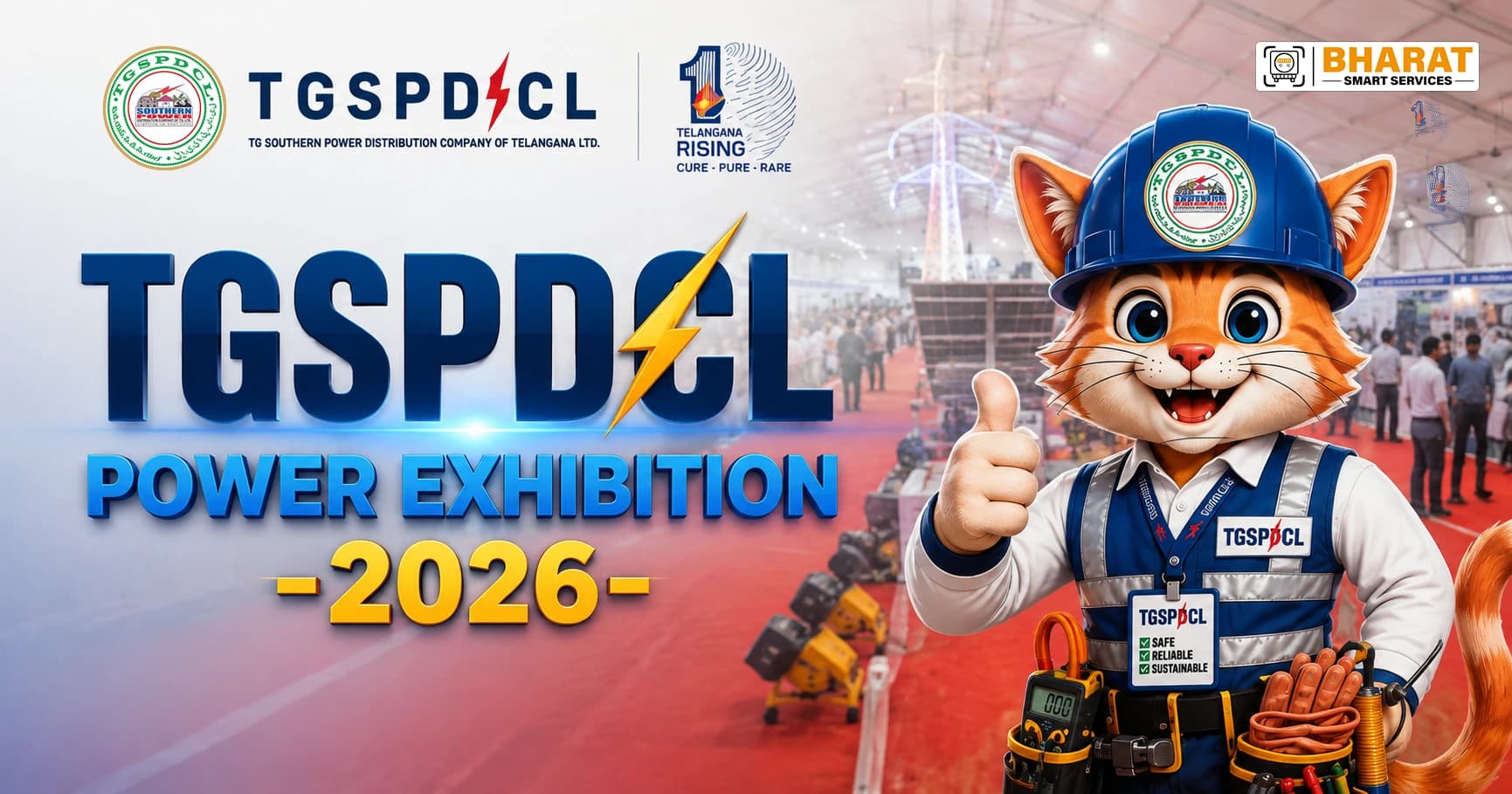
The TGSPDCL Power Exhibition 2026 at People’s Plaza, Necklace Road, Hyderabad makes that invisible system visible. The exhibition brings together the history of electricity, household electrical systems, safety, government power schemes, metering and billing, consumer services, digital technologies, distribution infrastructure, renewable energy, EV charging and field operations.
What makes the exhibition interesting from a consumer's perspective is that almost every technical display answers a very simple question:
|
“What does this have to do with my everyday life?” |
And once you look at the exhibition through that lens, it becomes much more than a display of power-sector technology. It becomes a lesson in how to become a more informed, safer and more responsible electricity consumer.
120 Years of Electricity: The Story Behind the Switch
One of the most fascinating parts of the exhibition is the 120-Year Electricity Heritage Gallery.
The display takes visitors through the evolution of electricity and metering, showing how the system has developed from earlier technologies to the digital infrastructure used today.
The historical electricity meters make this especially powerful.
A meter that once looked like advanced technology is now part of electricity history. Beside it are newer generations of meters that have changed the way electricity is measured and monitored.

For consumers, the message is surprisingly simple.
|
Electricity has taken generations of engineering to reach the level of convenience we take for granted today. |
That makes every unnecessary unit of electricity worth reconsidering.
Turning off an appliance when it is not needed may seem like a tiny action. But responsible electricity consumption starts with understanding that every unit has passed through a much larger system before reaching our home.
Value every unit of electricity you use.
Your Home Is an Electrical System Too
The exhibition gets even more relatable with a Living Room, Bedroom and Kitchen electrical display.
Instead of talking about electricity only through substations and transmission lines, this section brings the subject directly into the home.
It demonstrates 6A and 16A sockets and switches, MCBs, RCCBs, single-phase and three-phase energy meters, single-phase preventers, earthing and other electrical protection systems.
This raises an important question:
|
Is your home's electrical system designed for the way you use electricity today? |
A home that once had a fan, a few lights and a television may now have air conditioners, geysers, washing machines, induction cooktops, microwave ovens, refrigerators, chargers and several other high-load appliances.
That means household wiring and protection systems matter more than ever.
|
The right electrical system is not a luxury. It is a basic part of household safety. |
Electrical Safety Starts Much Before an Accident
The Electrical Safety, Earthing and Personal Protective Equipment section is another important part of the exhibition.
It displays electrical safety equipment such as gum boots, helmets, harnesses, protective clothing and other PPE, along with information about earthing and safe working practices.

One of the most important ideas here is that electrical safety is not something to think about only after an accident.
It begins with prevention.
| Safety starts with | Everyday responsibility |
| Earthing | Ensure proper earthing at home |
| Electrical protection | Use appropriate protective devices |
| Safe wiring | Do not ignore damaged wiring or overloaded sockets |
| Electrical hazards | Stay away and alert the utility |
And when you see a fallen wire, damaged pole or electrical equipment in water, stay away and inform the utility.
|
“A few rupees saved on wiring can never be worth the safety of your family.” |
Government Free Power Schemes: A Benefit Comes With Responsibility
For consumers looking for information about government free electricity schemes in Telangana, this is one of the most relevant sections of the exhibition.
The display highlights several government-supported electricity benefits, including Gruha Jyothi, free power for eligible educational institutions, free power for eligible salons and laundries, and 24/7 free power supply to agriculture.
Gruha Jyothi Scheme Telangana
The Gruha Jyothi Scheme provides eligible domestic households with free electricity consumption up to 200 units per month.
|
Eligible household benefit Up to 200 Units / Month |
Free Power for Agriculture
Telangana's power-sector programmes also include 24-hour free power supply to agriculture pump sets, supporting agricultural consumers as part of the state's electricity policy.
Free Electricity for Salons and Laundries
Eligible hair-cutting salons, laundry shops and dhobi ghats can also receive electricity support under applicable state schemes.
The important point is not simply that these schemes exist. It is understanding what they mean for the people who receive them.
|
|
A government electricity benefit is designed to provide support to eligible consumers. It should never be interpreted as unlimited electricity.
Know the benefit. Know the eligibility. Use it responsibly.
The Electricity Bill Tells a Story
Another important part of the exhibition focuses on metering, billing and electricity consumption.
Most consumers see the monthly electricity bill as one number:
Amount Payable
But that number represents something much more useful — a record of how electricity has been used.
If a bill suddenly increases, the right question is not simply, “Why is my bill so high?”
| Ask yourself | What may have changed? |
| Appliance usage | Did a high-load appliance run longer? |
| New appliances | Was a new appliance added? |
| Seasonal usage | Did weather change electricity demand? |
| Usage pattern | Did your household routine change? |
|
Don't just pay your electricity bill. Understand it. |
Smart Meters Are About Visibility
The transition from traditional meters to digital and smart meters is another important theme of the exhibition.
The phrase smart meter can sometimes create unnecessary suspicion among consumers. But the bigger idea behind smarter metering is visibility.
The more information you have about your consumption, the easier it becomes to understand your electricity behaviour.
|
A smarter meter can help you ask: • Which appliances consume more? • Why has usage increased? • Where can unnecessary consumption be reduced? |
A smarter meter is most useful when it creates a smarter consumer.
TGSPDCL Consumer Services: Electricity Services Are Going Digital
The exhibition also gives considerable attention to TGSPDCL consumer services.
Displays include consumer-facing digital services such as My Application Status, online services, service requests, grievance facilities, consumer support and digital communication channels.
Many routine electricity services can increasingly be accessed digitally, including checking bills, paying electricity bills, applying for services, tracking applications, registering grievances and exploring rooftop-solar services.
| TGSPDCL Consumer Service | What consumers can do |
| Know Your Bill | Check and understand consumption |
| Pay Bill Online | Make payments through official channels |
| New Service Registration | Apply digitally where available |
| Grievances / Service Requests | Register and follow up on issues |
Know the official consumer services available to you & use them when you need them.
TGSPDCL 1912: Know Where to Report a Problem
A power outage is one of the quickest ways to discover how much we depend on electricity.
The exhibition's 1912 and grievance-redressal section highlights a better approach to electricity-related complaints and service issues.
When the power goes out, it can be tempting to rely on rumours, neighbourhood WhatsApp groups or unofficial information.
|
“You don't have to know everything about the power system. You just need to know where to get the right help.” |
Give accurate information about the issue and location, and allow trained personnel to handle the technical response.
SCADA, DMS and Network Mapping: The Grid Is Getting Smarter
Terms such as SCADA, DMS, Network Mapping, Fault Passage Indicators and Sectionalizers may sound like engineering terminology meant only for professionals.
But the consumer benefit is easier to understand.
| Question | Why it matters |
| Where is the fault? | Helps identify the affected part of the network |
| What caused it? | Supports technical diagnosis |
| What area is affected? | Helps manage restoration |
| How can supply be restored? | Supports a safer and more informed response |
The grid is getting smarter. The next step is becoming a smarter consumer.
What Happens After You Register a Complaint?
The SASA Mobile App — Field Operations Platform display provides an interesting glimpse into the part of the electricity system consumers rarely see.
A complaint can involve a sequence of actions — assigning work, sending the field team, reaching the location, carrying the right equipment, completing the task and updating the status.
|
The consumer usually sees only one moment: |
The field-operations display reveals some of the digital machinery behind that moment.
A clear and accurate complaint gives the field team a better starting point.
E-Office: The Transformation Is Happening Inside the Utility Too
The E-Office Paperless File Management System is a different kind of exhibit.
It shows how the utility itself is adopting digital systems for administration, file movement, efficiency and transparency.
Digital transformation is not limited to consumer apps and smart meters. It also changes how the organisation works internally.
|
Better digital processes inside the utility can support better consumer service. |
Underground Cabling and Modern Substations
Some of the most important electricity infrastructure is also the infrastructure consumers see the least.
The exhibition highlights underground cabling, substations and modern distribution infrastructure, bringing attention to systems that usually remain outside everyday public view.
An underground cable may not be visible from the road, but it remains a critical part of the electricity network.
This becomes particularly important during construction and excavation.
Consumer lesson: Modern electricity infrastructure needs public cooperation to stay safe.
Power Ambulances: The People Behind Power Restoration
The exhibition's Power Ambulance and rapid-response displays bring another dimension into the electricity story.
Electricity restoration is not only a technical exercise. It is also a field operation carried out by people working around electrical hazards, difficult weather and damaged infrastructure.
That makes the PPE displays more meaningful too. The gum boots, helmets, harnesses and protective clothing are not simply equipment on a table. They exist because electrical field work can be dangerous.
|
See a fallen wire or damaged pole? |
Cybersecurity: Electricity Fraud Is Now a Digital Problem Too
The modern electricity consumer doesn't only need electrical awareness. They need digital awareness.
Fake power-bill messages. Fake disconnection threats. Fake payment links. Fraudulent calls. Requests for OTPs. Requests for bank information.
The exhibition's IT and cybersecurity messaging is therefore increasingly relevant to ordinary consumers.
|
Never let urgency override verification. |
A message claiming that your power will be disconnected in a few minutes is exactly the kind of message designed to make people act without thinking.
Pause. Verify the source. Use official TGSPDCL channels. Never share OTPs or banking credentials.
Rooftop Solar: From Electricity Consumer to Energy Participant
The renewable-energy section takes the conversation beyond simply consuming electricity.
With rooftop solar and net metering, a home can potentially become both a consumer and a generator of electricity under applicable rules.
| Traditional model | Emerging model |
| Utility → Consumer | Consumer ↔ Grid |
For consumers researching rooftop solar in Telangana, TGSPDCL net metering or the PM Surya Ghar Muft Bijli Yojana, this is an especially relevant part of the exhibition.
But solar should be approached with realistic expectations. A rooftop solar system does not automatically mean a zero bill in every household.
The actual outcome depends on consumption, system capacity, rooftop conditions, generation, applicable subsidy and net-metering arrangements.
|
"Stop just paying power bills—start generating your own power. " |
Smart EV Charging: Your Vehicle Is Also an Electricity Load
Electric vehicles are often discussed as a transport revolution. The exhibition encourages consumers to see another side of the EV story:
Electricity Demand
When an EV is charging alongside an air conditioner, geyser, washing machine and other high-load appliances, the home is handling a very different electricity load profile.
That is why the exhibition's Smart EV Charging and Battery Storage section matters.
|
The future is not only about driving electric. |
Energy Conservation Begins Inside the Home
The household displays bring all these ideas back to something very familiar: our own appliances.
| Everyday load | Questions to ask |
| Fans & lights | Do they need to stay on? |
| Air conditioner | How long is it running? |
| Geyser | Can usage be planned better? |
| Kitchen appliances | Can they be used more efficiently? |
Energy conservation does not always require a complicated technology.
Sometimes it begins with a simple question:
Do I really need this appliance running right now?
Consumer lesson: Know your household's electricity behaviour. Once consumption becomes visible, conservation becomes easier.
Power Games and Children's Energy Awareness
The exhibition is not only for engineers and utility professionals. It also creates space for children through Power Games, quizzes and interactive awareness activities, helping younger visitors understand electricity and energy conservation in a more engaging way.

This matters because the future electricity consumer is already growing up inside an increasingly electrified world.
A child reminding a parent to switch off a light may seem like a very small action.
|
Energy awareness begins with a conversation at home with your child. |
Why the TGSPDCL Power Exhibition 2026 Matters to Consumers
The most interesting thing about this exhibition is that its displays may appear completely different from one another.
| Exhibit | What it tells the consumer |
| 120-Year Heritage Gallery | Electricity has taken generations to evolve |
| Household Electrical Systems | The home itself needs safe electrical design |
| Free Power Schemes | Government benefits must be used responsibly |
| Smart Meters & Billing | Consumers should understand their electricity use |
| 1912 & Digital Services | Know and use official consumer channels |
| SCADA & DMS | The distribution grid is becoming smarter |
| Safety & PPE | Electrical hazards should be left to trained professionals |
| Rooftop Solar | Consumers can participate in the clean-energy transition |
| Smart EV Charging | The future consumer must think about when electricity is used |
What Should an Electricity Consumer Take Home?
|
The Consumer Responsibility Checklist
|
The Electricity System Has Evolved. Our Relationship With Electricity Needs to Evolve Too.
For more than a century, electricity infrastructure has continued to change to meet the needs of homes, businesses and communities.
Now consumers have a role in that future.
The responsible consumer is not simply someone who pays the electricity bill on time.
It is someone who understands how electricity is used, uses it safely, knows the services available to them, recognises legitimate government benefits, avoids wastage, respects the infrastructure and makes informed choices about emerging technologies.
|
Because electricity does not become our responsibility only when the bill arrives. It begins every time we turn a switch on. |
|
Electricity is more than a switch. Understanding the system is the first step towards becoming a smarter, safer and more responsible consumer. |